
German-Italian Roundtable on the Future of the European Steel Industry
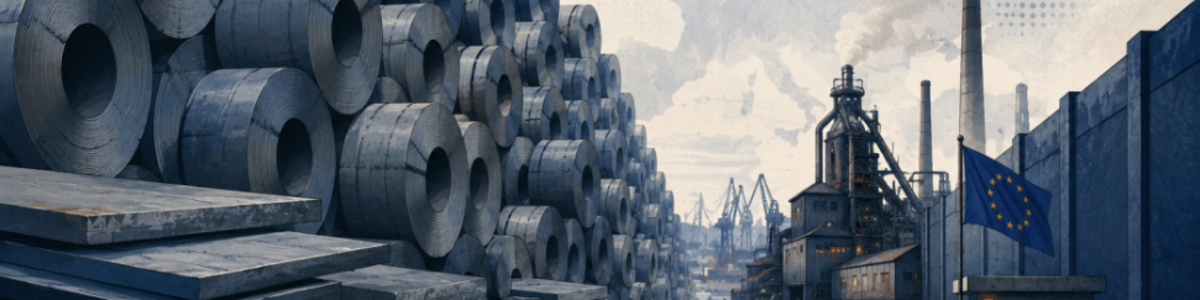
On 15 June 2026, the Europa-Institut of Saarland University and the Institute for European Policymaking @ Bocconi University (IEP@BU) co-organised a roundtable on the future of the European steel industry, held under the German-Italian Plan of Action for Strategic Bilateral and EU Cooperation of January 2026.
Representatives from government, industry and academia discussed the green transition, the EU Emissions Trading System (ETS), scrap markets, and the sector's role in European security. A key finding was the divergence between the two countries: while Italy already produces most of its steel in electric arc furnaces, blast furnace processes remain significant in Germany — requiring substantial investment and facing high energy costs as a structural disadvantage. The frequently invoked security argument was assessed critically: less than 0.5% of total steel output is attributable to armaments production.
The new EU Steel Safeguard Regulation sparked considerable debate. With existing measures expiring at end of June 2026 and global excess capacity projected at 721 million tonnes by 2027, the regulation establishes a permanent protection mechanism. Participants questioned whether 2013 is an appropriate reference year for import quotas and flagged the risk of retaliatory measures from third countries.
The roundtable's key takeaways are summarised in a commentary by Daniel Gros and Philipp Reinhold, published by IEP@BU.
We warmly thank all participants for a stimulating and productive exchange!